
Product photography for Kolkata sellers: what Amazon, Flipkart, Meesho, Google and Instagram each need
One product, five platforms, five sets of image rules. Here is what Kolkata sellers can rely on for Amazon, Flipkart, Meesho, Google and Instagram, and what still needs a check in the seller portal.

Why product photography specs matter for Kolkata sellers
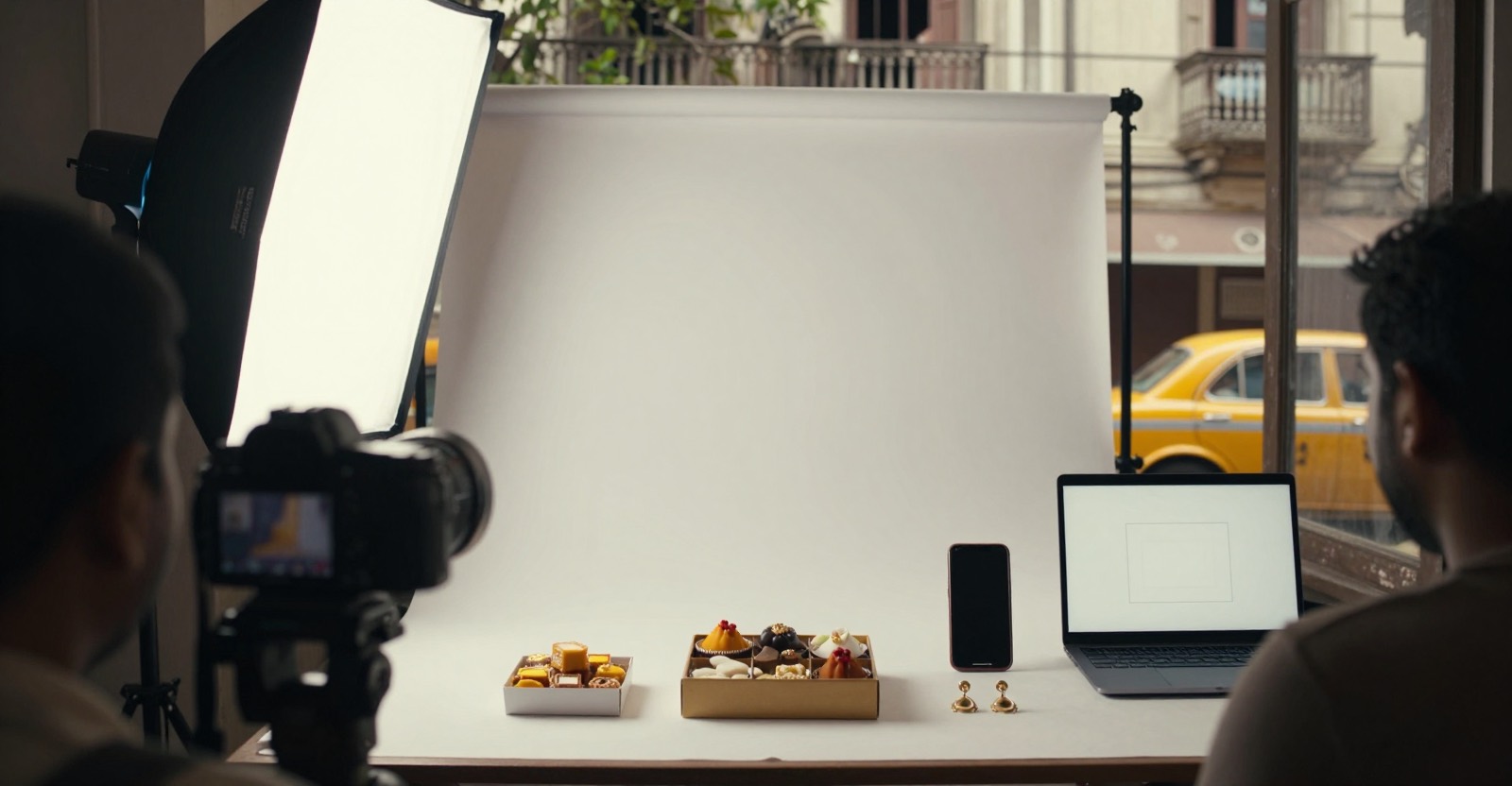
A Kolkata seller listing the same saree, sweet box or silver anklet on Amazon, Flipkart, Meesho, Google Shopping and Instagram is working with five different rule books. A photo that passes on one platform can be rejected on another.
How much do images affect returns? The evidence is thin and mostly from vendors. Rithum's 2025 global returns report, a vendor survey that is not India-specific, says about a third of respondents returned products because the item did not match its online description or images. A GS1 India and Kanvic Consulting study, reported in February 2026 and produced by an industry body with a commercial interest in product data, estimated that Indian online retail and quick commerce lose about Rs 5,000 crore a year from inconsistent or inaccurate product information, including images. We found no Kolkata or West Bengal figures and will not invent any.
On sources: the only official spec page we could read in full was Google Merchant Center's. The Amazon, Flipkart, Meesho and Meta figures below are as reported by third-party integration documents and seller guides. Check your seller portal before relying on them.
Amazon, Flipkart and Meesho image requirements, as reported
| Platform | Background | Size | Format | How sure are we? |
|---|---|---|---|---|
| Amazon.in | White for the main image; product fills 85% of the frame | Height or width at least 1,000 px | JPEG preferred; TIFF and GIF accepted | Third-party document; official page not readable |
| Flipkart | White or light grey; guides conflict | 1000x1000 px in one document; others say 500x500 or 800x800 | JPEG only | Third-party, conflicting |
| Meesho | No public spec found | 1:1 square; 1000x1000 or 500x500 depending on the guide | JPEG or PNG, up to about 5 MB reported | Unverified |
| Google Merchant Center | Product fills about 75% to 90% | 500x500 px minimum; about 1500x1500 recommended | JPEG, WebP, PNG, GIF, BMP, TIFF; up to 16 MB | Official page, read in full |
| Meta catalogue | No watermarks, overlays or retailer logos | 500x500 px minimum and 1080x1080 recommended, per guides | JPG or PNG, 8 MB maximum reported | Third-party |
Amazon.in
According to Fynd Commerce's integration document, the main image needs a white background, the product out of its packaging, and no multiple views, blur or cropping. For apparel it reports no mannequins and a standing model; for footwear, a single shoe facing left at 45 degrees. Seller guides such as Seller Labs add that text, logos and watermarks are prohibited on the main image and recommend uploading larger than the minimum for zoom. Those are guide recommendations, not confirmed Amazon.in text. The Seller Central India help page did not load its content for us, so check it while logged in.
Flipkart
The Fynd document for Flipkart reports a minimum of two images, with three preferred, and no price tags, text, watermarks, ratings or props with a solo product. For apparel it says a light grey background with a soft shadow is required and white is not accepted, with front and back views, no mannequins and the same model across shots. Footwear needs front, back, angled, top and sole views. Here the sources conflict: other guides, including Streamoid's, say Flipkart wants pure white in most non-lifestyle categories. Only Flipkart Seller Hub can settle this for your category.
Meesho
Meesho keeps its detailed image rules inside the Supplier Panel, which is not open to the public. Third-party guides agree on square images and no text or watermark on the primary image, but conflict on the minimum resolution. Treat all Meesho figures as unverified until you see them in your own panel.
Google Merchant Center and Instagram sizes
Google is the one platform where we read the official page. Google Merchant Center Help says images must be at least 500x500 px for all products beginning 31 January 2027, with no image above 64 megapixels. It prohibits promotional text and overlays such as prices, delivery or warranty claims, along with watermarks, logos or shop names added in post-production, barcodes and QR codes, borders, placeholders and items not sold with the product.
Instagram sizes come from third-party guides, not Meta's own help pages. Buffer's 2026 size guide gives 4:5 portrait at 1080x1350 as the most-cited feed size, 3:4 at 1080x1440 as an option since a May 2025 change, square at 1080x1080, and 1080x1920 (9:16) for Reels and Stories. Some sources say ads and scheduled posts top out at 4:5. For Meta catalogues, guides report that images below 500x500 px or carrying watermarks can be disapproved.
One shoot, every platform: a practical plan
The following is our inference from the figures above, not a platform rule.
- Shoot one master image per product. A square file of at least 2000x2000 px, product filling about 85% of the frame, on pure white, exported as JPEG. This meets the Amazon, Flipkart generic and Google figures we could read.
- Keep it clean. No text, logo, watermark, price sticker or props on the main image.
- Add a light-grey version for Flipkart apparel. One third-party source asks for it, so verify in Seller Hub before paying for a second set.
- Frame wide for Instagram. Shoot lifestyle frames loose enough to crop 4:5 or 3:4 for the feed and 9:16 for Reels and Stories.
- Shoot the mandatory angles. Front and back for apparel and accessories, plus sole and top views for footwear.
- Check against the portal on upload day. Specs change, and the logged-in page is the authority.
Image size on the longest side

AI-generated and edited product images
AI is not banned by ASCI, Google or Meta. The common test is whether the picture misrepresents the product.
- ASCI. Its guidelines on labelling synthetically generated content in advertising were released on 29 September 2026 and take effect on 29 December 2026, according to a Khaitan & Co note. Content is sorted into prohibited, label required and no label needed. Routine edits that do not change the substance or core claims need no label. Misleading content stays prohibited even if labelled, for example synthetic depictions that exaggerate product results.
- Google. AI-generated images must keep the metadata that marks them as AI-made. Do not strip those tags.
- Meta. Ad images created or materially edited with Meta's own generative tools get an "AI info" label; resizing or colour correction does not trigger it.
- Amazon. Seller-education blogs say AI images are allowed if they represent the item accurately, with AI lifestyle scenes kept to secondary slots. We could not confirm this, or a claimed August 2026 tightening, against any Amazon source.
In practice, background cleanup and colour correction sit on the safe side. An AI render that changes a saree's drape, colour or texture, a stone's size or the look of a food item risks being treated as misleading, with or without a label. Penalties of up to Rs 10 lakh for a misleading advertisement under the Consumer Protection Act are reported by Mondaq; we did not confirm the figure against the Act.
This is a reminder, not legal advice. Confirm labelling and advertising questions with a qualified adviser.

Notes for sarees, jewellery and food
Sarees and loose garments
Under rule 26(f) of the Legal Metrology (Packaged Commodities) Rules 2011, garments sold loose must still carry the name and address of the manufacturer, marketer or brand owner, a consumer-care email and phone number, size, and MRP inclusive of all taxes. The same information must appear on the e-commerce website when sold online.
Gold and silver jewellery
News and consultancy sources report that hallmarked gold carries three marks: the BIS logo, purity and a six-digit HUID. Silver hallmarking is reported to remain voluntary, with HUID required on hallmarked silver from 1 September 2025. A close-up of the hallmark is a sensible trust practice, but we found no rule requiring a HUID photo in online listings.
Packaged food
The food labelling regulations, read from a reproduction of the 2020 gazette text, require mandatory label information to reach the buyer before an online sale, except batch number and dates. A legible back-of-pack image or equivalent text helps meet that, and labels must not be false or misleading, which also applies to pack shots and renders.
What we could not verify
- Amazon.in's official image text, including the exact white-background wording, the maximum number of images, video specs and A+ content image sizes.
- Flipkart Seller Hub and Meesho Supplier Panel guidelines. Flipkart's background colour and Meesho's minimum resolution remain conflicted.
- Meta's own catalogue spec and Instagram's help article on aspect ratios, and whether Instagram Shops checkout features are available in India.
- Any independent, India-specific study isolating the effect of image quality on conversion or returns, and any Kolkata or West Bengal statistics.
- Marketplace-specific rules for saree, jewellery and food images.
- BIS hallmarking details, which come from news and consultancy reports and not from BIS pages.
How ScaleCine can help
For a small Kolkata seller, ScaleCine would scope product photography around the listings that matter most: a short product list, one planned shoot day, and a fixed set of deliverables per product, such as a white-background master, the mandatory angles and crops for Instagram. We would check each file against the specs shown in your own seller portal before handing it over.
Editing would stay within cleanup and colour correction unless you ask for more, and we would tell you where an AI-assisted image may need a label. Message us on WhatsApp at +91 97759 04441 to talk through your catalogue.
ScaleCine sells the services discussed here, so read this as a supplier's view. See our Product Photography service or message us on WhatsApp with your budget and deadline.
Sources
- Fynd Commerce docs, Amazon image guidelines (undated)
- Fynd Commerce docs, Flipkart image guidelines (undated)
- Seller Labs, Amazon product image requirements guide (2026)
- Amazon Seller Central India, help page G1881 (content not readable)
- Streamoid, Flipkart seller guide
- Streamoid, Meesho seller guide
- Google Merchant Center Help, image_link attribute
- Buffer, Instagram image size guide (2026)
- GoDataFeed, Meta product image contains watermark disapproval
- Khaitan & Co ERGO, ASCI guidelines on synthetically generated content labelling (12 Oct 2026)
- Meta Help, AI-generated images in ads
- Seller Labs knowledge base, generating product images with AI
- Mondaq, CCPA guidelines for misleading advertisements and endorsements 2022
- Rithum, 2025 Global Returns & Profit Impact Report (blog)
- IT Brief India, poor product data costs Indian e-commerce Rs 5,000 crore (Feb 2026)
- Legal Metrology (Packaged Commodities) Rules 2011 as amended to 13 Feb 2026, Khaitan & Co copy
- Agile Regulatory, latest BIS hallmarking changes
- GJEPC Solitaire, BIS reports response to mandatory silver HUID rollout
- TaxGuru, Food Safety and Standards (Labelling and Display) Regulations 2020 (reproduction)