
Selling online from Kolkata: your own store or Amazon, Flipkart and Meesho?
Marketplaces have cut commission to zero on most low-priced goods, but zero commission is not zero cost. Here is how the fees, taxes and return risks compare for a Kolkata seller choosing between a marketplace and an own online store.

What marketplaces charge Kolkata sellers now
For anyone selling online from Kolkata, the fee picture changed quickly. Flipkart moved to zero commission on products priced below Rs 1,000 in November 2025, Business Standard reported, and the same report notes that Meesho has long operated a zero-commission model. Amazon followed with zero referral fees on products under Rs 1,000 from 16 March 2026, covering more than 1,800 categories. Its named examples include sarees, T-shirts, bed sheets and fashion jewellery.
Zero commission is not zero cost. Closing fees, shipping fees, storage, cancellation charges and returns remain. Amazon's own worked examples, for items under 500 g, show what a seller still pays:
| Amazon example | Selling price | Fees before | Fees after | Share of price after |
|---|---|---|---|---|
| Fashion jewellery set, Easy Ship | Rs 999 | Rs 324 | Rs 100 | About 10% |
| Earphones, FBA | Rs 798 | Rs 248 | Rs 109 | About 14% |
| T-shirt, Easy Ship | Rs 299 | Rs 71 | Rs 56 | About 19% |
The last column is our arithmetic. All Amazon fees also attract 18% GST, and advertising and returns come on top. The Amazon.in fee page shows shipping at Rs 55 for a 350 g Easy Ship item, charged on the higher of actual and volumetric weight with a 500 g minimum, and closing fees rose by Rs 1 to Rs 3 per unit from 7 September 2026.
Fees keep moving. YourStory reported that Amazon and Flipkart both restructured seller fees and penalties before the 2026 festive season, including an Amazon cancellation fee of 10% of order value on orders below Rs 10,000 for Easy Ship and Self Ship. Check the live rate card before you price anything.
The Rs 1,000 pricing cliff
Above Rs 1,000, the category referral rate returns. On Amazon's fee page, shirts pay 0% up to Rs 1,000 and 21% above it, and baby apparel pays 7% above Rs 1,000. As we read the fee table, the rate applies to the whole price once an item crosses the line, so a product at Rs 999 and one at Rs 1,100 can leave you with very different margins.
This matters for Bengal handloom and boutique fashion, where many price points sit close to Rs 1,000. It is worth working out the fee on each product before listing, and deciding deliberately which side of the line each one sits on. Some categories are exceptions: electronic devices pay 9% up to Rs 1,000.
What your own online store costs
An own store avoids commission but carries its own fees. Two published rate cards give a starting point:
- Platform. Shopify India lists Basic at Rs 1,499 a month on yearly billing, or Rs 1,994 on monthly billing, plus a 2% fee when a third-party payment provider is used. The next plan, Grow, is Rs 5,599 a month with a 1% fee.
- Payment gateway. Razorpay's standard rate card shows a flat 2% platform fee on domestic payments including UPI, cards and netbanking, with no setup or annual fee and 18% GST on the fee. We checked only Razorpay, so do not assume every gateway charges the same.
Rough maths for an entry store: about Rs 18,000 a year for the platform, plus about 4% of sales, plus GST on the fees. A WooCommerce store on shared hosting avoids the Shopify 2% but not the gateway fee. On an item priced above Rs 1,000 this is cheaper per order than a marketplace referral rate of 7% to 21%.
The catch is traffic. A marketplace brings shoppers to you; your own store supplies none. You pay for that through Google and Meta ads, search visibility or the slow work of building repeat customers. In return, you own the customer relationship and the data, which also brings data protection duties.
Cash on delivery and returns
The second catch is returns. All figures in this section come from logistics and payment companies with a commercial interest, so treat them as vendor estimates.
- Cash on delivery is put at 60% to 65% of Indian e-commerce orders, a 2024 research figure quoted second-hand by Razorpay.
- ClickPost reports that 37.51% of COD orders on its network came back as return-to-origin in FY2026, against 5.28% of prepaid orders. It cites other data putting COD returns at about 26%.
- The same blog cites Meesho's prospectus: 22.3% of COD orders went undelivered against 2.7% of prepaid orders.
- Unicommerce reports the return-to-origin rate for direct-to-consumer brands peaking at 39.2% in November 2025 and falling to 21.0% by March 2026 for brands that added a prepaid incentive.
Each undelivered parcel costs you shipping both ways and ties up stock. On your own store that cost is entirely yours, so a small discount for prepaid UPI orders is one of the first things to consider.
Orders that came back undelivered: cash on delivery vs prepaid

GST and tax: how the two routes differ
This is a reminder, not legal or tax advice. Most of it comes from tax explainers, not the notifications themselves. Confirm your position with a chartered accountant.
- Marketplace sellers. GST registration is generally compulsory from the first sale, whatever your turnover, and the composition scheme is not available, according to tax explainers.
- The 2023 relaxation. Notification 34/2023 exempts small goods sellers from registration if turnover is below the threshold, they make no inter-state supply, sell through marketplaces in only one state, hold a PAN and obtain an enrolment number on the GST portal. A seller shipping only within West Bengal could start this way, but the first order to another state ends the exemption.
- Own-website sellers. The normal threshold applies for sales within the state, cited as Rs 40 lakh for goods in most states. Any inter-state sale triggers compulsory registration. We could not confirm West Bengal's threshold from an official source.
- Deductions on payouts. Marketplaces collect TCS of 0.5% under GST, and income-tax TDS of 0.1% of gross sales per ClearTax. These are credits against your tax, so they affect cash flow, not margin.
Which route suits a Kolkata business?
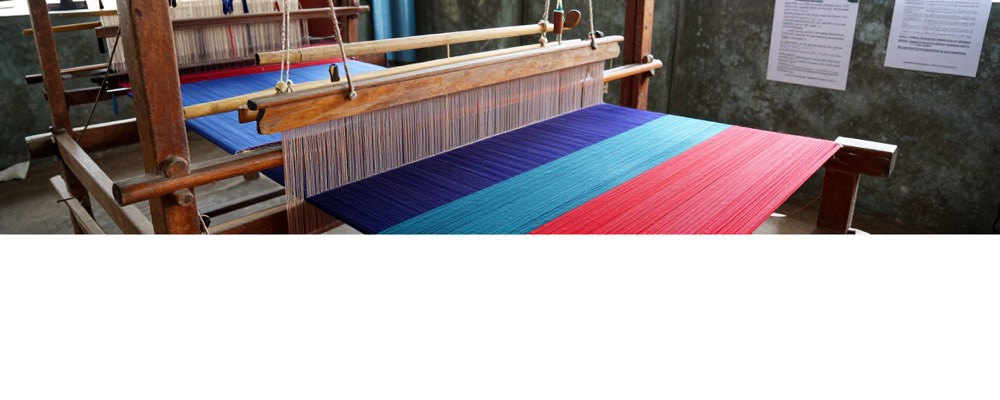
The demand is real. Bain's How India Shops Online 2025, co-authored with Flipkart, puts e-retail at about $60 billion in 2024 with more than 270 million shoppers, and says over 60% of new sellers since 2021 are from Tier-2 and smaller cities. Flipkart says more than 66,000 sellers from West Bengal sell on its platform, and that over 250 Tant and Jamdani weavers and sellers in Shantipur generate more than Rs 100 crore in annual sales. These are company claims and unaudited.
The evidence supports using both routes for different jobs:
- Sort your price list. Mark every product as below or above Rs 1,000 and work out the fee per order on each platform.
- Use marketplaces for discovery. List lower-priced, high-volume items where commission is zero and shoppers already search.
- Build your own store for repeat buyers. Put higher-priced items and loyal customers on an own store where you keep the relationship.
- Push prepaid payments. Offer a small incentive for UPI or card payment to reduce cash-on-delivery returns.
- Settle the tax position first. Decide with your accountant whether you will sell outside West Bengal before the first listing goes live.
- Watch ONDC. The government-backed network handled 218 million transactions in FY2025-26, according to trade press. It is an emerging third channel, still small beside the wider market.
New online sellers since 2021 from Tier-2 and smaller cities
60%and more
What we could not verify
- Flipkart's and Meesho's own seller fee pages. Their shipping, fixed, collection and return charges are unconfirmed from primary pages.
- Amazon's full closing-fee and weight-slab tables, which are images on the fee page. Only its worked examples are quoted here.
- Payment gateway rates other than Razorpay's.
- Cash-on-delivery share and return rates from any regulator or audited dataset. Only vendor figures exist in what we found.
- Current ONDC monthly orders and seller counts. Reports conflict, one citing over 6 lakh sellers and another around 5 lakh. No West Bengal ONDC data was found.
- Amazon or Meesho seller counts for West Bengal or Kolkata, and any Kolkata-specific e-commerce demand data.
- Independent figures for Bengal handloom sales online beyond Flipkart's Shantipur claim.
- Whether West Bengal's GST threshold for goods is Rs 40 lakh, and the exact text of the newer income-tax provision on marketplace TDS.
How ScaleCine can help
For a small Kolkata seller, ScaleCine would scope this in stages so the first spend stays modest. We would start with a fee-per-order comparison on your actual price list, then prepare one set of product photographs and descriptions that works for both marketplace listings and your own store.
If an own store makes sense, we would keep the first version small: a limited catalogue, UPI and card payments, a clear returns policy and test orders before launch. Message us on WhatsApp at +91 97759 04441 or use the contact page to discuss your range.
ScaleCine sells the services discussed here, so read this as a supplier's view. See our E-commerce Websites service or message us on WhatsApp with your budget and deadline.
Sources
- Amazon India, press release: zero referral fees on over 12.5 crore products (March 2026)
- Amazon.in, Fees and pricing (checked 14 Nov 2026)
- Business Standard, Flipkart zero commission in value commerce (14 Nov 2025)
- YourStory, Amazon, Flipkart restructure seller fees and penalties ahead of festival season (Aug 2026)
- Shopify India, pricing (checked 14 Nov 2026)
- Razorpay, pricing (checked 14 Nov 2026)
- Razorpay blog, Cash on delivery (updated June 2026, vendor)
- ClickPost, E-commerce RTO statistics India (vendor)
- Unicommerce, India D2C report (April 2026, vendor)
- Disytax, Is GST mandatory for online sellers (tax explainer)
- Disytax, GST for online sellers (tax explainer)
- IRIS GST, Notification 34/2023-Central Tax (31 July 2023)
- GST Council, Notification 15/2024-Central Tax (July 2024)
- ClearTax, Section 194-O explainer
- Bain & Company, How India Shops Online 2025 (26 March 2025)
- Flipkart Stories, Flipkart strengthens its partnership with West Bengal (13 July 2026, company claim)
- Cross-Border Magazine, ONDC passes 500 million transactions (trade press)
- Siasat, ONDC onboards over 6 lakh sellers